
You spent months building. The app works. It's live. And now you're staring at it, wondering how anyone is supposed to find it.
You're not alone. We read 1,000+ founder posts from seven Reddit communities. The single most common problem was zero users after launch. Of the 27 founders who asked about it, about 11 had already finished building before they asked. Some had spent six months on their product. Some had spent more than a year. In this day and age, building the product is easy. It is the distribution that matters.
This guide is for that moment. It won't hand you a 40-page marketing strategy. It gives you a starting point you can act on this week, with no audience and no ad budget.
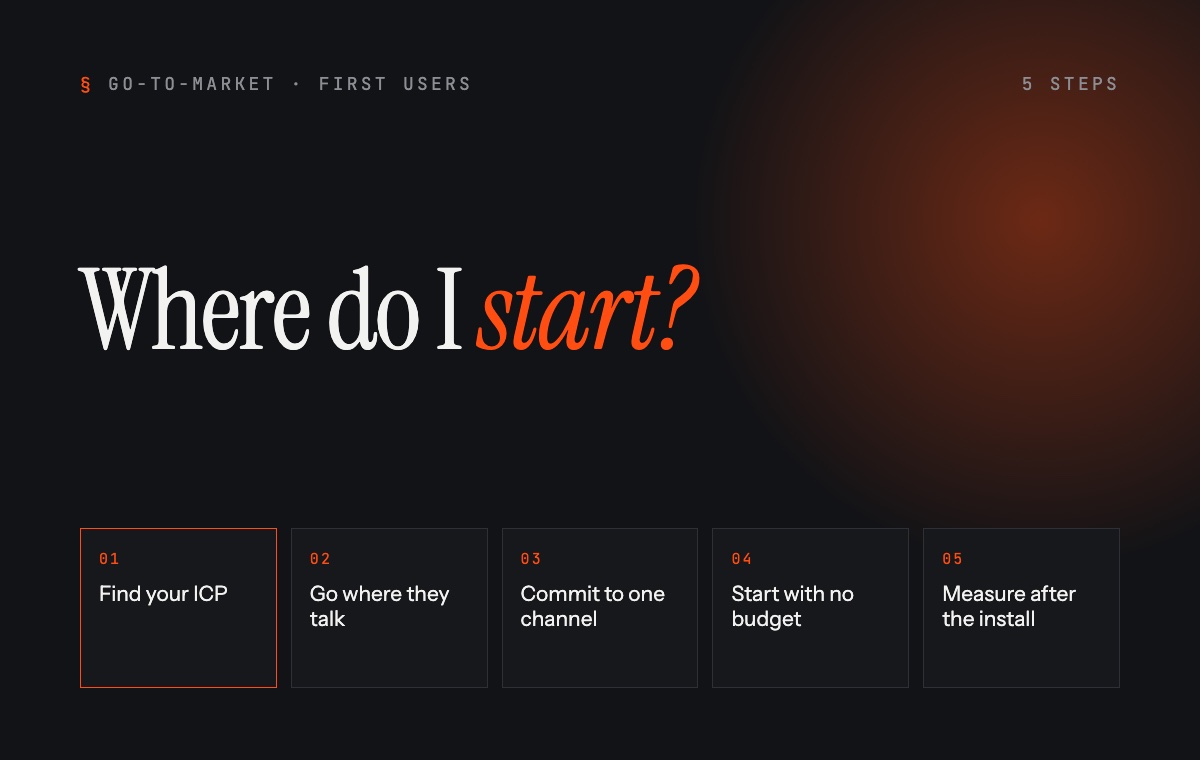
A five-step plan to get your first users
1. Find your ICP, and be obsessed
"Teachers, researchers and students around the world" won't cut it. Make it more like "18–24-year-old women in their Social Sciences undergrad degrees in Northern Bahamas". Otherwise, it's three audiences across three different geographies. Find one person in that niche and be obsessed with them. Hang out where they do, talk to them and see how they word their problems. Find the banes of their existence. That's gold for your positioning.
If you can't name them in one sentence, that's your first task.
2. Obsession levels up: stalk the ICP, hang out where they do
No one reinvents the wheel, and neither should you. Go where your ICP already talks about the problem: a subreddit, a Slack or Discord group, a forum, a Facebook group, a trade association, an app store category. Read for a week before you post anything. Note the exact phrases people use, because those phrases become your headlines, your landing page copy, and your search keywords. Google Trends can be your best friend too.
3. Pick a channel and commit to it
A curious, really ambitious founder asked, "Which channels should I go all in on?" The real question lies a step behind: which one channel should he go all in on?
Choose a single channel where your ICP hangs out the most and start showing up consistently. Give it real time and effort before you judge it. Spreading thin across five channels usually means none of them gets enough effort to work.
4. Start without a budget
Your first users rarely come from ads. They come from conversations, and it lowkey works better if they're your best friends.
- Answer real questions in the communities you found, without linking your product every time.
- Reach out one by one to people who described the exact problem you solve. Keep it personal and short.
- Offer early users something useful, like setup help or a founding-user price, in return for honest feedback.
- Share what you're learning as you build. A specific story about a real problem beats a generic launch post.
This doesn't scale, and it isn't meant to. The goal is your first 10 to 50 users and a clear sense of why they signed up.
5. Measure what happens after the install
This is the step most founders skip. Installs and signups feel like progress, but they don't tell you whether a channel works. Track three things for every channel you try:
- Where the user came from.
- Whether they completed setup and reached the moment your product is useful.
- Whether they came back or paid.
A channel that brings 500 installs and no paying users is worse than one that brings 20 installs and 5 subscribers. Double down on the second.
Know which channel is actually working
Once your first channel starts bringing people in, the hard part is seeing what happens next. That answer is usually spread across your ad platform, your analytics and your subscription data.
Bonnie Ai is an AI analytics agent for app teams. It connects tools like Google Ads, PostHog, Firebase and RevenueCat, so you can ask one question, like "Which channel brings users who actually subscribe?", and get one answer.
Frequently asked questions
What is a go-to-market plan?
A go-to-market plan is how you get your product in front of the people who need it. For an early-stage founder, it can be as simple as three answers: who your first user is, where they already spend time, and which one channel you'll use to reach them.
How do I get my first users with no budget?
Go where your users already ask for help, answer their questions genuinely, and reach out one by one to people who describe the problem you solve. Early users usually come from conversations, not ads.
How many marketing channels should I start with?
Start with one. Give it real time and effort, and measure whether the users it brings stay or pay, not just whether they sign up.
How do I know which channel is working?
Track each user from where they came from to whether they came back or paid. Installs alone can be misleading.
Next read How to Set Up Bonnie Ai: Connect Google Ads, PostHog, RevenueCat & GitHub (+3 Prompts)